Welcome to the ultimate digital tool for strength athletes and fitness enthusiasts. A highly accurate Bench Press Calculator is essential for anyone looking to safely and effectively increase their upper body pushing strength. Testing your true one-rep max (1RM) under a heavily loaded barbell can be dangerous without proper spotting and technique.
By inputting the weight you lifted and the exact number of repetitions completed, our system provides an instant, science-backed estimate of your maximal power. This allows you to program your chest workouts with absolute precision. You can confidently map out your training blocks without risking central nervous system burnout.
Whether you are a competitive powerlifter peaking for a meet or a beginner mapping out a new routine, this tool provides the actionable data you need. Stop guessing your training loads and start using our free Bench Press Calculator to optimize every single workout session for maximum muscle growth.
What is the Bench Press Calculator?
The Bench Press Calculator is a specialized digital utility designed to estimate your absolute maximum strength for a single repetition. It utilizes established physiological formulas to extrapolate your 1RM based on submaximal lifting data. This means you can lift a lighter, safer weight for multiple reps and still accurately discover your peak capability.
This specific tool is highly trusted by strength coaches, personal trainers, and elite athletes across the globe. By analyzing your repetition performance, a reliable Bench Press Calculator takes the guesswork out of weightlifting programming. Knowing your 1RM is absolutely crucial for structured, load-based training protocols like 5/3/1 or standard block periodization.
⚠️ Training Disclaimer: Heavy resistance training carries inherent physical risks. Always use a spotter and practice proper lifting mechanics when pushing your body near its maximum strength capacity.
The Core Breakdown: How Our Bench Press Calculator Works
Understanding the complex math behind the calculation process empowers you to train much smarter. Testing a true 1RM taxes the body heavily and significantly increases connective tissue injury risk. Using this mathematical system with a rigorous 3-to-8 repetition set provides a highly accurate estimate without the associated physiological fatigue.
📐 Formula & Methodology
Brzycki 1RM Estimation Formula: Weight Lifted ÷ (1.0278 - (0.0278 × Repetitions))
Epley 1RM Estimation Formula: Weight Lifted × (1 + (Repetitions ÷ 30))
Blended Mathematical Average: (Brzycki Max Estimate + Epley Max Estimate) ÷ 2
Tiered Load Distributions: Calculated incrementally from 100% down to 50% of 1RM
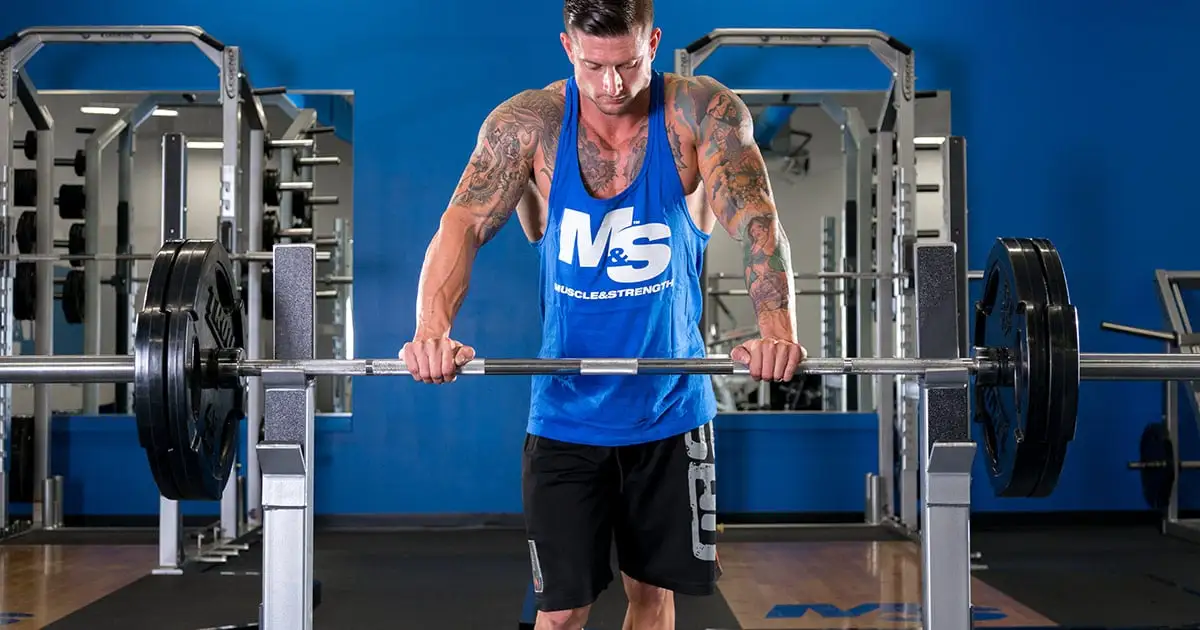
Practical Guide: Bench Press Calculator Strength Matrix
To get the absolute most out of your generated results, you need to intimately understand different training zones. Different load percentages of your maximum limit yield vastly different physiological and muscular adaptations.
Training consistently at 90% builds raw, explosive power, while training at 70% induces optimal muscle hypertrophy. Below is a comprehensive breakdown of how to apply the custom numbers generated by your Bench Press Calculator to your specific fitness goals.
| 1RM Percentage | Repetition Target | Primary Adaptation | Optimal Rest |
|---|---|---|---|
| 90% – 100% | 1 – 3 Reps | Max Strength & Peak Power | 3 – 5 Minutes |
| 80% – 90% | 4 – 6 Reps | Heavy Strength & Mild Hypertrophy | 2 – 3 Minutes |
| 70% – 80% | 7 – 12 Reps | Optimal Muscle Hypertrophy | 60 – 90 Seconds |
| 60% – 70% | 12 – 15+ Reps | Muscular Endurance & Conditioning | 45 – 60 Seconds |
How to Implement the Bench Press Calculator
Calculating your theoretical limit is just the very first step in a successful upper body development program. You must consistently apply this generated data to your weekly training blocks to force progressive muscular adaptation.
Re-test your estimated maximum every four to six weeks to ensure your numbers remain highly accurate. This systematic tracking ensures your working percentages scale appropriately as your chest, shoulders, and triceps get stronger.
Who Uses the Bench Press Calculator?
- Competitive Powerlifters — establish baseline metrics and set safe opening attempts using a reliable Bench Press Calculator before a meet.
- Bodybuilders — locate the precise load percentage required to trigger maximum muscle hypertrophy in the chest.
- Strength Coaches — program multi-week off-season training camps for massive athletic rosters.
- Personal Trainers — safely assess client capabilities without risking form breakdown under a true one-rep max attempt.
- Everyday Gym-Goers — break through stubborn strength plateaus using structured, mathematical programming.
💚 Tips for the Most Accurate Results
- Keep your test set between 3 and 8 repetitions for peak algorithmic accuracy.
- Once you push past 10 reps, the formula measures anaerobic endurance more than pure absolute strength.
- Always include the weight of the actual barbell (typically 45 lbs or 20 kg) in your total weight lifted.
- Pause the very first repetition on your chest for one second to eliminate momentum and simulate real powerlifting conditions.