About the Board Foot Calculator
Estimating lumber volume accurately is critical for any carpentry, woodworking, or construction project. Our free Board Foot Calculator takes the guesswork out of pricing and material planning. By providing instant, high-precision results, this tool ensures you only buy exactly the amount of lumber you need.
Whether you are a professional contractor or a hobbyist woodworker, managing project costs starts with accurate measurements. The Board Foot Calculator helps you track raw lumber volume in board feet (BF) effortlessly. It also integrates a cost-tracking function so you can align your material list directly with your working budget.
Hardwood is incredibly expensive, and making estimation errors can severely impact your bottom line. Using a reliable Board Foot Calculator guarantees you apply internationally recognized unit standards to your material list. Stop relying on manual math and let this automated tool handle the complex volumetric conversions for you.
The Core Breakdown: Understanding the Formula
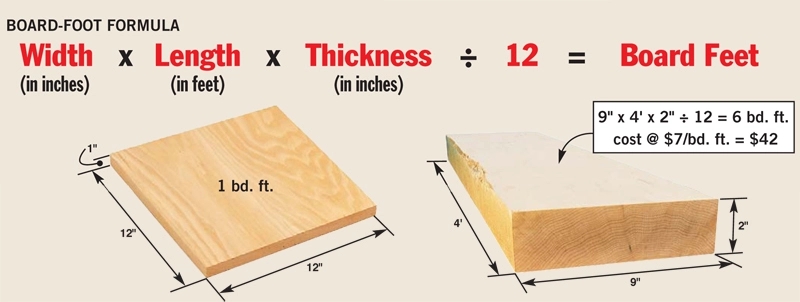
A board foot is a specialized unit of volume used primarily in the lumber industry across the United States and Canada. It explicitly represents the volume of a rough-sawn board that is 12 inches wide, 12 inches long, and 1 inch thick. This equates to exactly 144 cubic inches of solid wood.
To calculate this volume manually, you must multiply the thickness, width, and length of your lumber together. If your length measurement is recorded in feet, you divide the total product by 12. The Board Foot Calculator automates this foundational step, instantly converting your raw dimensions into accurate board feet.
If your length is measured in inches, the mathematical approach changes slightly to maintain unit consistency. You must divide the total product by 144 instead of 12 to find the correct volume. Thankfully, the Board Foot Calculator handles these underlying unit conversions seamlessly behind the scenes.
📐 Standard Formula & Methodology
Board Foot Formula (Length in Feet): (Thickness (in) × Width (in) × Length (ft)) ÷ 12 = BF
Alternative Formula (Length in Inches): (Thickness (in) × Width (in) × Length (in)) ÷ 144 = BF
Volumetric Constant: 1 Board Foot = 144 cubic inches = 1/12 cubic foot
Net Total Cost: Calculated Board Feet × Unit Quantity × Price Per Board Foot
Practical Guide: Common Lumber Dimensions
When buying lumber, it is incredibly important to understand the difference between nominal and actual dimensions. A standard 2×4 is a nominal size, meaning the actual physical cross-section is smaller after the mill surfaces it. The Board Foot Calculator can process both rough-sawn dimensions and surfaced dimensions based on your inputs.
To give you a quick reference point for common structural materials, we have compiled a data matrix of standard lumber sizes. Use this comparison table to quickly estimate baseline volumes before plugging exact, fractional numbers into the Board Foot Calculator.
How to Use the Board Foot Calculator
Operating the Board Foot Calculator is incredibly straightforward and requires no advanced technical knowledge. First, measure the thickness of your board in inches. Next, measure the width of your board in inches and input both of these baseline values into the corresponding fields.
Finally, enter the length of your board, ensuring you specify whether your measurement is in feet or inches from the dropdown menu. The tool will instantly calculate and display the precise board foot volume. You can also enter the current market price per board foot to instantly calculate your total material cost.
⚙️ The Hardwood Sizing System
Unlike construction lumber, hardwoods are often sold using the quarter-inch system. For example, 4/4 lumber is 1 inch thick, while 8/4 lumber is 2 inches thick. Always input the decimal equivalent (e.g., 1.5 for 6/4 wood) into the thickness field for accurate results.
Accounting for Woodgrain Defects and Waste
It is vital to remember that board footage strictly measures raw geometric spatial volumes. It does not account for natural defects like knots, deep checks, severe bows, or the saw kerf loss that occurs during milling. Therefore, you must always factor in a realistic waste allowance.
Professional woodworkers typically add a 15% to 20% waste buffer to their final material calculations. Once the Board Foot Calculator provides your total baseline volume, multiply that final number by 1.20. This simple adjustment guarantees you purchase enough workable material for your fine furniture or millwork.
🔗 Related Calculators You May Need
⚙️ Calculation Accuracy Notes
- Verify unit consistency before entering values—do not mix inches and centimeters.
- Results from the Board Foot Calculator display to precise decimal figures appropriate for fine woodworking.
- For critical architectural applications, always verify material loads independently before bulk ordering.