Planning a new roof installation, building a home extension, or simply estimating material costs? Accuracy in your initial measurements is everything. A highly accurate roof pitch calculator is the ultimate planning tool for contractors, professional architects, and dedicated DIY builders.
It completely eliminates costly guesswork by converting basic slope dimensions into actionable structural data. Whether you need precise angles, grade percentages, or standard fraction ratios, this tool delivers instant results.
Stop relying on rough field estimates that inevitably lead to wasted materials and budget overruns. Use our free roof pitch calculator to streamline your entire project workflow and ensure your structural integrity aligns perfectly with modern building codes.
The Core Breakdown: Understanding Roof Pitch
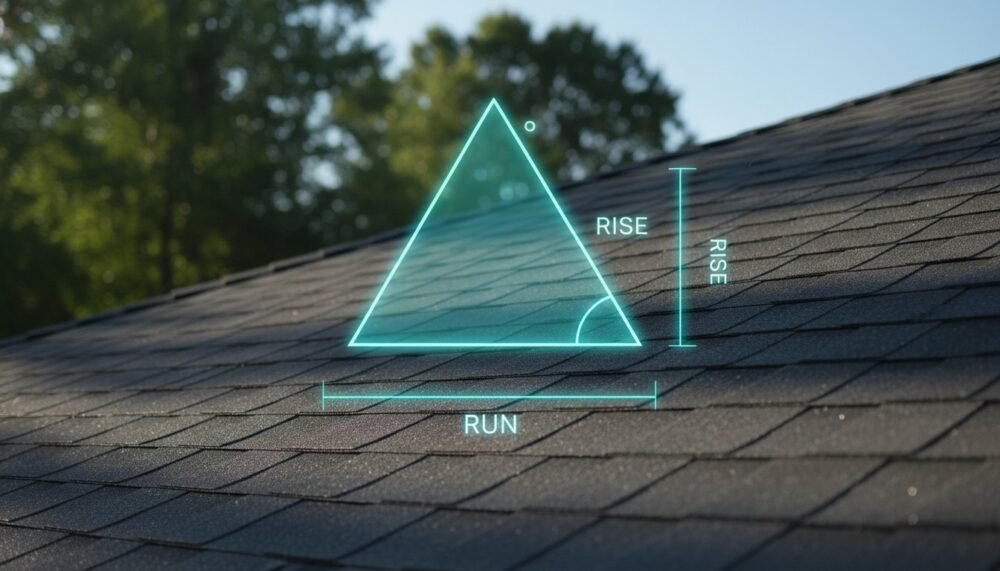
Understanding the fundamental mechanics of roof slope is essential before ordering materials. Roof pitch explicitly measures the steepness of your roof structure. It is traditionally expressed in the construction industry as a straightforward ratio of vertical rise to horizontal run.
In North America, the standard horizontal run baseline is almost always set at exactly 12 inches. Therefore, a common 6/12 pitch rating simply means the roof rises 6 inches vertically for every 12 inches it extends horizontally.
Calculating these metrics manually requires a solid grasp of geometric and trigonometric principles. Thankfully, a reliable roof pitch calculator bypasses the complex math completely.
📐 Standard Formula & Methodology
Pitch to Angle: Angle (Degrees) = arctan(Rise ÷ Run) × (180 ÷ π)
Angle to Pitch: Rise Value (per 12 units) = tan(Angle) × 12
Percentage Grade: Grade % = (Rise ÷ Run) × 100
Rafter Multiplier: Multiplier Vector = √(Rise² + Run²) ÷ Run
Practical Guide: Standard Pitch Classifications
Different roofing materials require very specific slope minimums to shed water effectively. Using a roof pitch calculator helps you instantly determine if your architectural design meets these critical manufacturer specifications.
Installing materials on an improper slope can void warranties and cause severe water pooling. Below is a comprehensive quick-reference matrix detailing common roof pitch classifications, their angles, and optimal materials.
| Roof Classification | Pitch Ratio | Angle (Degrees) | Ideal Materials |
|---|---|---|---|
| Flat Roof | 1/12 to 2/12 | 4.8° to 9.5° | Membrane (TPO, EPDM), Built-up |
| Low Slope | 3/12 to 4/12 | 14.0° to 18.4° | Metal Panels, Roll Roofing |
| Conventional | 5/12 to 8/12 | 22.6° to 33.7° | Standard Asphalt Shingles |
| Steep Slope | 9/12 to 12/12+ | 36.9° to 45.0°+ | Wood Shakes, Clay Tiles |
How to Use the Roof Pitch Calculator
Operating our digital roof pitch calculator is intentionally straightforward and designed for maximum field efficiency. You do not need to be a licensed structural engineer to use it successfully.
Simply measure your physical rise and run, or identify your desired architectural slope angle from your building blueprints. Enter these known values directly into the designated input fields.
Leave the unknown variable blank, and the roof pitch calculator will instantly compute the missing data points. All final results are displayed to high mathematical precision, guaranteeing you have the exact numbers needed for your materials list.
⚙️ Structural Accuracy Notes
- Always ensure your field measurement values use consistent unit systems before calculating.
- Mixing inches with feet, or imperial with metric, is the most common source of construction calculation errors.
- For critical structural supports or safety-related truss applications, verify results independently with a licensed structural engineer.
Practical Construction Applications
A digital roof pitch calculator is far more than just a simple online math utility. It is an indispensable asset for various critical phases of residential and commercial construction planning.
- Material Estimation: Accurately calculate the exact total square footage of shingles, underlayment, and flashing needed.
- Rafter Cutting: Determine the precise straight-line length of roof rafters without wasting expensive lumber.
- Drainage Planning: Ensure your roof slope easily meets minimum local building code requirements for rapid water runoff.
- Load Calculations: Assess how your specific steepness directly impacts heavy snow load shedding and wind resistance.
Why Roof Pitch Matters for Durability
The steepness of your roof plays a massive role in the overall lifespan of your building envelope. A steeper slope dramatically accelerates water drainage and prevents ice dams during harsh winter months.
Utilizing a roof pitch calculator ensures you optimize this critical angle for your specific local climate. Conversely, lower sloped roofs are significantly cheaper to build and much easier to walk on during routine maintenance.
However, low slopes demand specialized waterproof membranes because water naturally drains much slower. A roof pitch calculator allows contractors to strike the perfect structural balance between initial cost, safety, and long-term durability.